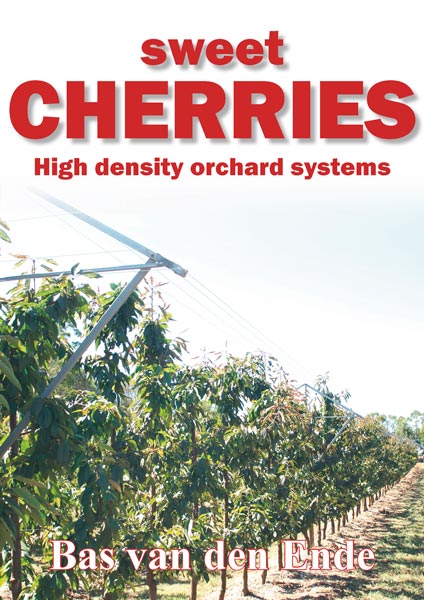
Cherry blossoms are bursting from their buds, full of promise as the days get longer and warmer.
Some regions have experienced cooler than average weather conditions, delaying the start of flowering by several days.
This may or may not lead to a later start for the season. The start of harvest depends on the total number of growing degree days from full bloom to harvest—therefore warmer conditions during that time could cause the original delay in flowering to alter or even disappear.
Improving fruit set
Given that bee hives have been strategically placed in and around the orchard, those varieties that seem difficult to crop profitably might have been given inducements such as:
- timed use of a dormancy breaker to harmonize the flowering time of a late flowering variety
- buckets of extra flowers pruned off from an extra variety to assist with pollination
- care taken to not spray insecticides in the orchard during flowering (or at least not while bees are actively foraging)
- raising the temperature with the use of reflective plastic sheeting when it is too cold for bees to work the blossom
- spraying blossom with a registered attractant and other tricks that can be useful.
- In the end, fruit set on the tree is what remains after shedding, and very little can be done to modify that position.
Effects of fruit set
A low fruit set is likely to result in larger fruit (unless the variety is genetically opposed to that taking place).
That said, a smaller crop is also at higher risk of rain damage from splitting.
A heavy fruit set may result in too much small fruit which then slows picking time and lowers the market price, but it is less likely to be at high risk from rain splitting—unless under extreme conditions such as continual rain falling over several days.
At least with a heavy crop set, action can be taken to modify the crop by removing a percentage from the tree while the cherries are still green.
Benefit from thinning fruit
Putting small cherries through a cherry grader can be very expensive as a percentage of the smaller fruit may not be large enough for the fresh market and will drop out of the grading system.
So, even if the size of the cherries that remain on the tree only increase slightly, the main benefit gained from removing the smaller ones in the orchard, is the saving from not picking, packing and disposing of them from the packing shed.
Think ahead
One can only hope for a balanced crop of cherries on the tree that produce fruit of high quality, good size and firmness. And for weather conditions that complement the hard work and input carried out during the year. All this while you think about:
- the destination (export or domestic)
- adapting the spray program to the destination
- the quality assurance system
- protocols for fruit movement between states
- the level and movement of the A$
- water use and availability
- size carton or pack to order and use.
Is it any wonder that, as Australia moves toward doubling food production in the future, there is a call for more graduates of agricultural science and agricultural management!
For more information, see October 2012 Tree Fruit